Mammogram Johannesburg: your questions answered
Last updated October 2026
What is a mammogram?
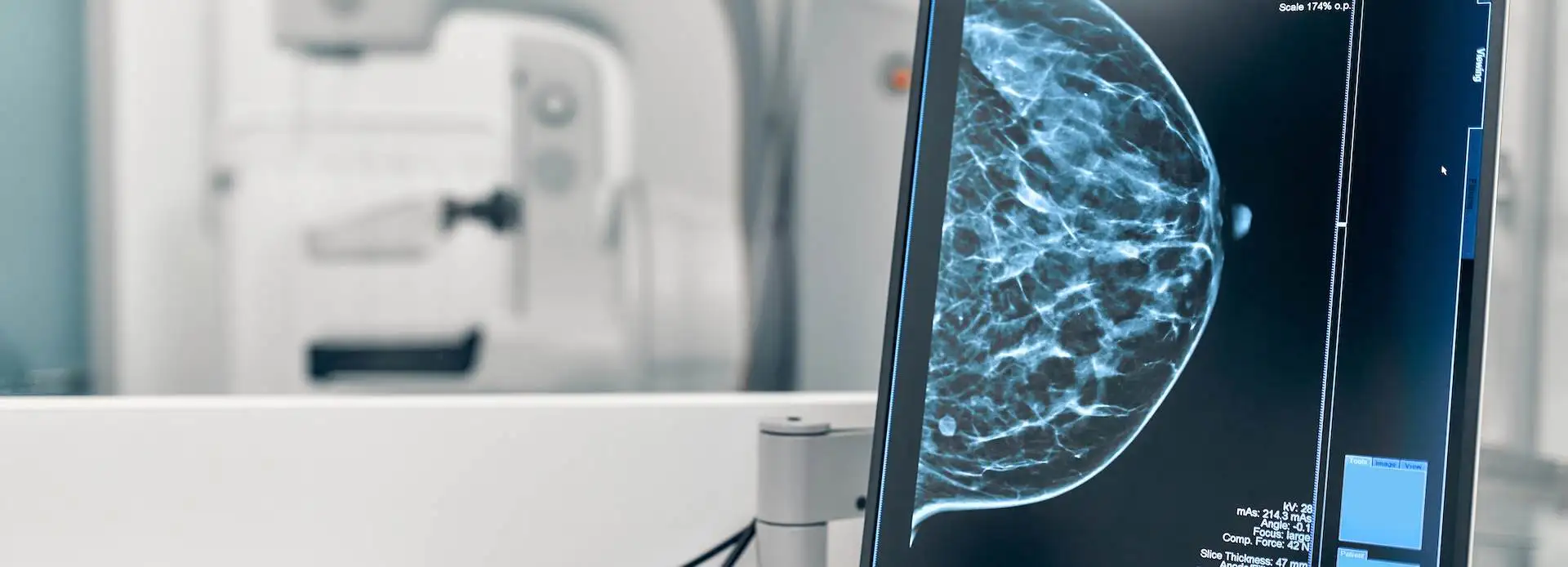
A mammogram is a low-dose X-ray of the breast used to find breast cancer early, often before a lump can be felt. Finding cancer early gives you more treatment options and better outcomes.
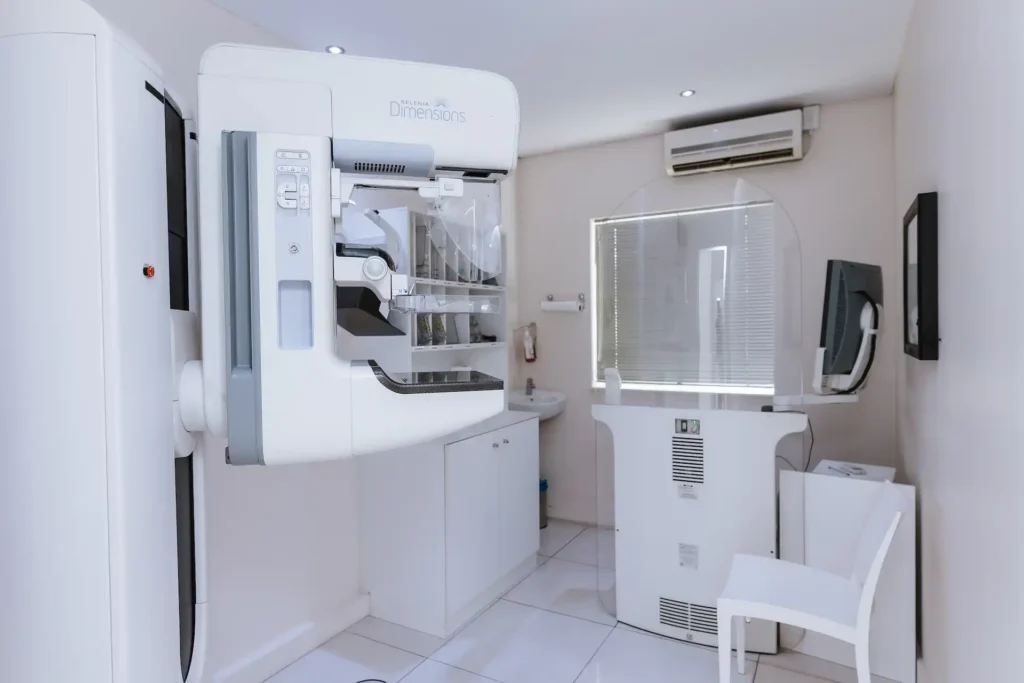
At the Centre of Advanced Medicine in Waverley, Johannesburg, we use the Hologic Selenia Dimensions. It takes a standard 2D mammogram and a 3D tomosynthesis scan together, in a single compression. Every image is reported by one of our specialist diagnostic radiologists.
3D mammography compared with 2D mammography
Most women are familiar with the 2D mammogram. 3D tomosynthesis builds on it by taking many thin-slice images, so our radiologists can examine breast tissue one millimetre at a time.
| 2D mammogram | 3D tomosynthesis | |
|---|---|---|
| Images | Two flat images per breast | A series of thin slices, plus 2D images |
| Overlapping tissue | Can hide cancers | Slices separate overlapping tissue |
| Dense breasts | Harder to read | Performs better, with fewer missed findings |
| Callbacks | More false-positive recalls | Fewer unnecessary recalls |
| At our centre | Taken in the same compression | Taken in the same compression |
Who should have a mammogram, and when?
Current guidelines recommend annual screening from age 40 for women at average risk. If you have a family history of breast cancer, or other risk factors, you may be advised to start earlier. Your GP can help you decide.
If you notice a change in your breasts, such as a new lump, nipple discharge or a change in the skin, see your doctor promptly rather than waiting for your next screening.
Screening or diagnostic mammogram?
- A screening mammogram is a routine check when you have no symptoms. No referral is needed at our centre, and walk-in bookings are welcome.
- A diagnostic mammogram investigates a symptom or an abnormal result. A referral is recommended, and is required for medical aid purposes.
Dense breasts and why 3D matters
Dense breast tissue is common and is not abnormal. On a mammogram, dense tissue and cancers both appear white, so cancers can be harder to see on a 2D image alone. 3D tomosynthesis performs measurably better in dense breasts.
Your doctor may sometimes suggest a breast ultrasound as well. We offer both, so you can have them with the same team. See our ultrasound service for details.
Understanding your results
Mammogram reports commonly use the BI-RADS scale, which runs from 0 (more imaging needed) to 6 (known cancer). Being called back for more images is common and usually does not mean cancer. It often means the radiologist wants a closer look at an area.
Speak to your doctor about what your report means for you.
Medical aid and payment
We submit your mammogram to your medical aid. If you pay cash, our quoted price includes your consultation. WhatsApp us on 072 647 7630 or call 011 440 7877 for a quote.
Visit us in Waverley, Johannesburg
We are at 13 Scott Street, Waverley, Johannesburg, 2090. We see patients from Linksfield, Sandton, Rosebank, Randburg, Roodepoort, Midrand, Boksburg, Benoni and across Johannesburg.
Opening hours are Monday to Friday, 7:30 am to 5 pm. We are closed on Saturday and Sunday.